Google Cloud Managed Services - What Operational Support and Monitoring Looks Like
If you are looking for someone to run your Google Cloud environment day to day, the question “what are GCP managed services” has two layers. Conflating them leads to confusing offer comparisons, so let us separate them up front and focus on the one you usually mean when choosing a partner: operational support and monitoring.
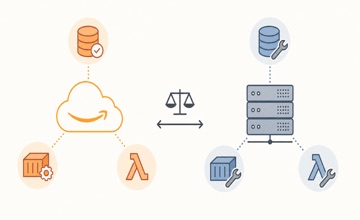
Two meanings of “managed services” in GCP
| Meaning | What it is | Who does it | What the decision is about |
|---|---|---|---|
| Managed operations (MSP model) | A partner takes over running your GCP: 24/7 monitoring, incidents, patching, FinOps, on-call | A partner (such as Devopsity) instead of your ops team | Who runs operations: an external partner or an in-house team |
| Google managed services (buy vs build) | Components Google maintains for you: Cloud SQL, Memorystore, GKE Autopilot, BigQuery | Google at the service level; you configure | What to hand to the platform rather than run yourself on VMs |
The first is a service you buy. The second is an architecture choice. The rest of this article starts with the first (because that is usually what you are asking when comparing support offers), then shows which Google managed services make sense in production.
GCP operational support and monitoring - what taking over operations covers
When Devopsity takes over operations for a Google Cloud environment, the scope matches our cross-cloud CloudOps practice, delivered with GCP-native tooling:
- 24/7 monitoring and observability - Cloud Monitoring and Cloud Logging (the Cloud Operations Suite, formerly Stackdriver), complemented by Datadog, Prometheus, or Grafana where the team already uses them. SLO dashboards, alerts based on error rate and latency rather than raw CPU.
- Incident response - on-call with L1/L2/L3 escalation, runbooks for common GKE and Cloud SQL failures, postmortems. This is the difference between monitoring you set up yourself and monitoring that someone actually responds to.
- Patching and updates - GKE release channels, node-pool upgrades, Cloud SQL versions, container image patching, and CVE triage under an agreed SLA.
- FinOps - Committed Use Discounts (CUDs), rightsizing, cleanup of unused resources, BigQuery slot optimisation. Details in our guide to GCP cost optimisation.
- Backup, DR, and access - tested restores, DR procedures with verified RTO/RPO, IAM and least-privilege reviews, secret rotation.
Monitoring without response is just charts. The point of operational support is that someone answers the 3am alert and resolves it before users notice.
How to compare GCP managed-services offers
“Google Cloud managed services” offers look alike on the page and differ exactly where it hurts:
- SLA and response times - is there a real on-call rota with a guaranteed response time for a critical incident, or just “we respond during business hours”.
- GKE depth - who actually understands Workload Identity, network policies, Autopilot vs Standard, versus who just restarts pods.
- FinOps included - is cost optimisation (CUDs, rightsizing, BigQuery) built into the retainer or billed separately.
- Audit readiness - does the partner maintain continuous access logs, change history, and evidence for SOC 2 / ISO 27001, or assemble them in a panic before an audit.
- Knowledge portability - do you get runbooks and documentation, or does the knowledge live in one person’s head on the partner’s side.
Devopsity answers all five concretely, because we run GCP operations as a certified team (Professional Cloud Architect, Professional Cloud DevOps Engineer), not as a bolt-on to another service. The full scope is on our GCP consulting and services page.
Which Google managed services make sense in production
This is the second layer - an architecture decision, not a choice of partner. In production on GCP it usually pays to lean on Google’s managed services where you add no value by running them yourself:
- GKE Autopilot instead of managing node pools yourself - Google runs the node layer, you pay for pods. Sensible for most teams without a dedicated platform team. Choose GKE Standard when you need control over nodes (GPU, custom kernel, Spot).
- Cloud SQL (PostgreSQL/MySQL) instead of a database on Compute Engine - automatic backups, HA with failover, patching. Run your own database on a VM only for exotic extensions or hard control over configuration.
- Memorystore (Redis/Memcached) instead of your own Redis on a VM - managed, with HA and patching.
- BigQuery as a managed warehouse - serverless, you pay per query or for slots; the key here is FinOps (slots, partitioning), not maintenance.
- Cloud Run for stateless services - managed containers without managing a cluster, when you do not need full Kubernetes.
The rule is the same on any cloud: managed services buy engineering time at the cost of some control. We lay out the full “managed vs self-managed” logic (with AWS examples, but the principle transfers) in our article on AWS Managed Services vs self-managed.
GCP as part of multi-cloud operations
Most of our clients are not “GCP only”. Devopsity runs operations across AWS, GCP, and Azure under a single CloudOps practice, so the framework (SLA, runbooks, FinOps, audit readiness) is shared and only the per-cloud tooling layer changes. If you run a multi-cloud estate, one partner running operations consistently across all platforms is usually simpler than a separate team per cloud.
Next steps - a GCP environment review
Taking over GCP operations starts with a review: we map the environment (GKE, Cloud SQL, network, IAM, cost), document dependencies, and come back with a retainer scope, an SLA, and a FinOps savings projection (CUDs, rightsizing). Devopsity is a GCP partner with a certified team and runs operations, not just advises on them.

Looking for operational support for GCP?
Book a free 30-minute call. We will review your Google Cloud environment and propose a scope for operational support, monitoring, and FinOps.
Frequently asked questions
Compare Google Cloud managed-services offers for operational support and monitoring.
When comparing Google Cloud managed-services offers for operations and monitoring, five things matter: a real SLA and on-call rota (not “we respond during business hours”), GKE depth (Workload Identity, Autopilot vs Standard, network policies), FinOps built into the retainer (Committed Use Discounts, rightsizing, BigQuery slots), continuous audit readiness (access logs and evidence for SOC 2 / ISO 27001), and knowledge portability (runbooks rather than knowledge in one head). Monitoring is delivered natively through the Cloud Operations Suite (Cloud Monitoring and Logging), often complemented by Datadog or Grafana. Devopsity runs GCP operations as a certified team within a cross-cloud CloudOps practice, with L1/L2/L3 incident response and FinOps included in the retainer.
Which Google Cloud managed services make sense for a production environment?
In production it usually pays to lean on Google’s managed services where running them yourself adds no advantage: GKE Autopilot (Google runs the node layer), Cloud SQL for PostgreSQL/MySQL (automatic backups, HA, patching), Memorystore for Redis/Memcached, BigQuery as a serverless warehouse, and Cloud Run for stateless services without managing a cluster. You choose self-managed on Compute Engine when you need exotic extensions, kernel-level control, or Spot/GPU instances. This is an architecture decision (buy vs build), separate from choosing a partner to run operations.
How do managed services as a service differ from Google’s managed services?
They are two different meanings of the same term. Managed services as a service (the MSP model) is a partner taking over the day-to-day operations of your GCP: monitoring, incidents, patching, FinOps under an SLA. Google’s managed services (Cloud SQL, GKE Autopilot, Memorystore) are components Google maintains at the platform level while you configure them. The first answers “who runs my operations”, the second answers “what to hand to the platform rather than run myself”. Devopsity delivers the first and advises on the second.
Does Devopsity run operations on GCP only, or also AWS and Azure?
Devopsity runs operations across AWS, GCP, and Azure under a single CloudOps practice. The operational framework (SLAs, on-call, runbooks, FinOps, audit readiness) is shared across all clouds, and only the per-platform tooling layer changes (on GCP: Cloud Operations Suite, GKE, Cloud SQL). For multi-cloud estates, one partner running operations consistently across all platforms is usually simpler and cheaper than a separate team per cloud.